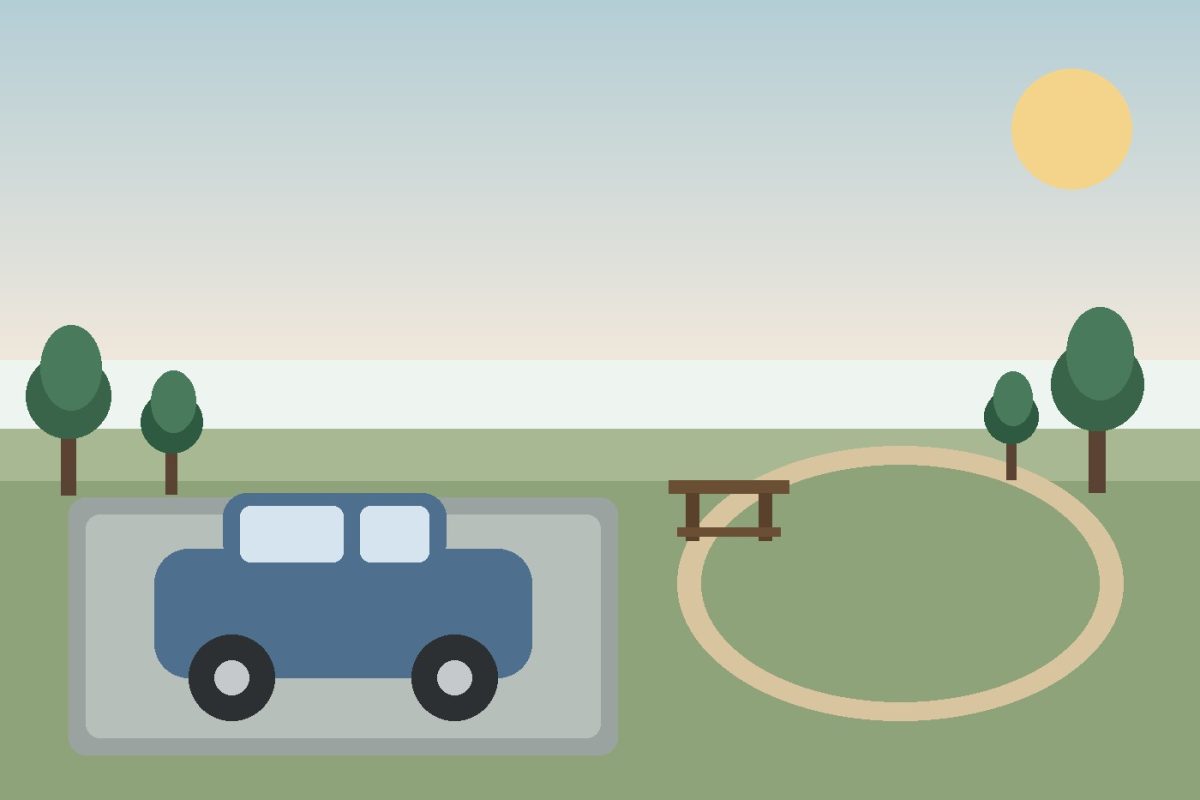
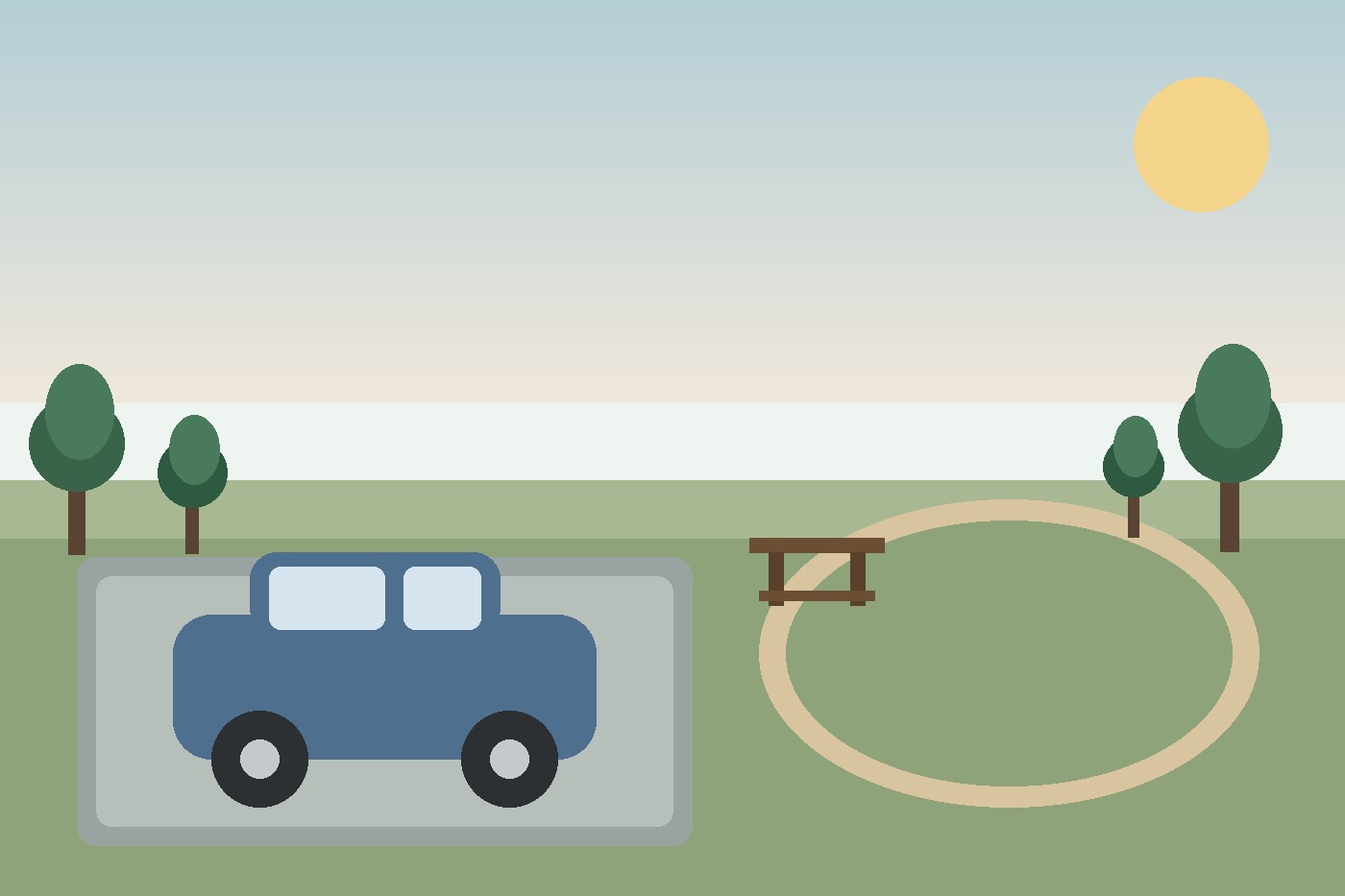
The diagrams in this article are original flat illustrations created for Healthcare Worker Fitness. They are not photographs of a real person, a real rest area or a real trip.
Not medical advice. This is general fitness information for healthy adults. It is not a treatment plan, a weight-loss program, a diagnosis or a substitute for advice from your own clinician. If you have an injury, a medical restriction or you feel unwell, follow your clinician’s guidance. If you are not safe to drive, do not drive.
A lot of healthcare workers do not get a clean holiday week off. You may work Wednesday, drive Thursday, or squeeze a trip in between shifts. Hours in a car or in an airport seat are just sitting. You do not need to “make up” that sitting with a hard workout when you arrive, especially if you are already tired from work.
A more useful plan is smaller: build in brief movement breaks on the way, then leave the rest of the visit alone. If the day you are traveling toward is a day off, our recent article, If You Have the Holiday Off: A Low-Key Movement Plan for Healthcare Workers, covers a simple walk-once plan for the gathering itself. If you are working the holiday, see Working Holiday Shifts: How to Eat and Move When You Work Thanksgiving or Christmas instead.
What the CDC suggests for holiday travel
The CDC’s page Tips for Healthy Holiday Travel includes movement advice for the trip, not only for the day you arrive. In the car, it says to plan stops along your route to take brief physical activity breaks. At a rest stop, it suggests taking 10 minutes to walk, jog or do a few jumping jacks, and it notes that any physical activity is better than none. Those 10 minutes, the CDC says, count toward the recommended minutes of activity you need every week. At the airport, it suggests walking to your gate when possible instead of taking a tram or shuttle.
The CDC’s physical activity guidelines for adults recommend at least 150 minutes a week of moderate-intensity aerobic activity, such as brisk walking, or 75 minutes of vigorous activity, or an equivalent mix, plus muscle-strengthening activity on at least two days. Those minutes do not have to happen in one session. The CDC notes that you can break activity into smaller chunks, and that some physical activity is better than none. A 10-minute rest-stop walk is one of those chunks, not a full week’s plan.

A simple plan for a long drive
Before you leave, pick one or two places you can actually stop. A rest area, a familiar exit or a parking lot where you can get out and walk safely is enough. You do not need a route with a gym.
- Plan the stop, don’t wait until you feel desperate to get out. The CDC travel tip is to plan breaks along the route. A reminder on your phone or a note on the directions works.
- Ten minutes is a complete break. Walk a loop around the rest area, or walk to the end of a safe sidewalk and back. If you like, jog or do a few jumping jacks on level ground away from traffic, as the CDC suggests. Skip anything that feels unstable on wet pavement, ice or a tight slope.
- Wear shoes you can walk in. If you started the trip in work shoes, change if you have a simpler pair. You do not need new gear.
- Treat weather and traffic as real limits. If a stop is poorly lit, icy, crowded right up to a travel lane or feels unsafe, stay in the car and try a better stop later. A missed walk is not a failed trip.
This is not a roadside workout. Keep moving out of travel lanes, watch for cars that are pulling in or out, and keep the break short enough that you still arrive reasonably on time.
If you are flying
The same idea applies in an airport, with one CDC-specific tip: walk to your gate when you can, instead of taking a tram or shuttle. A lap of a quiet concourse during a layover is also a brief break. You do not need a full session in a terminal hallway, and you do not need to skip a meal or a chance to sit when you are exhausted.
If the trip starts after a shift
Movement breaks only make sense if you are already making a trip you are fit to drive or to fly. If you are leaving right after a night shift, start with the safer-drive plan in Drowsy After a Night Shift? How to Plan a Safer Drive Home. Do not use a rest-stop walk as a way to push through drowsiness. If you are not safe to drive, do not drive.
A short walk after a long sit can feel good. It is not a treatment, and it is not a reason to ignore fatigue, pain, ice or a medical limit from your own clinician.
What this plan is not
It is not a make-up workout for a week of missed sessions. It is not advice about blood clots, swelling or any medical condition, and it is not a promise about weight, mood or injury. It is also not a rule that every trip must include jumping jacks or a timed walk. One planned stop, or a walk to the gate, is enough of a plan.
When you arrive, you can stop there. A low-key walk later in the visit is optional and is covered in the day-off article linked above. If you already have a routine you like, keep it at a comfortable pace after you have rested.
A one-line plan you can keep
Write one cue before you leave, such as “Stop once and walk for 10 minutes” or “Walk to the gate.” That is the whole plan. If the cue does not happen, you have not failed the holiday. You can walk the next time it is safe and convenient, or simply rest and return to the routine you already use on workdays.
Not medical advice. Content here is general information and not a substitute for advice from your own clinician.