Some links in this post are affiliate links. As an Amazon Associate I earn from qualifying purchases.
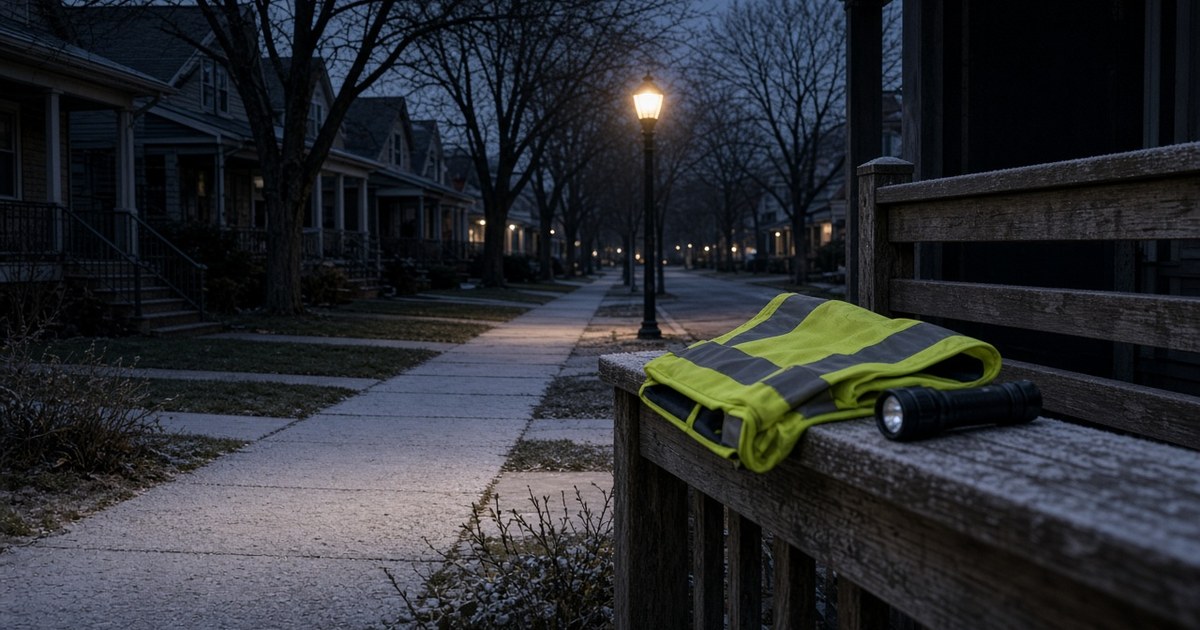
By late November, a lot of healthcare workers leave home in the dark and come home in the dark. If walking is your main exercise, or you walk to the bus, the train, or a far corner of the staff parking lot, winter changes the picture. It’s darker, colder, and sometimes icy, and drivers are tired and rushing too.
None of this is a reason to stop walking. Walking is one of the easiest ways to work toward the CDC’s recommendation of 150 minutes of moderate activity each week, and the CDC’s page on adding physical activity as an adult uses brisk walking as its main example. It just takes a little more planning. Here’s how to stay visible, keep your footing, and keep the habit going through the dark months.
Be seen: visibility comes first
NHTSA’s driver tips on pedestrian safety remind drivers to take extra care at night and in bad weather, because pedestrians can be harder to see and may appear suddenly. You can’t control drivers, but you can make yourself easier to spot.
Wear something reflective
Dark scrubs and a navy or black winter coat are close to invisible at night. Reflective material bounces headlight beams back toward the driver, which is why reflective vests are standard gear for road crews.
A lightweight reflective vest can go over a coat and fold into a pocket. A high-visibility two-pack like the Chiwo reflective running vests means one vest can stay by the door and the second can live in your car or go to a walking partner. Check the sizing details on the listing so it fits over your winter coat. Reflective bands on your ankles or wrists are another option, since moving parts catch the eye.
Carry or wear a light
A light helps drivers see you, and helps you see the ground in front of you, which matters a lot once there’s ice. A headlamp keeps your hands free for a bag, coffee, or a handrail. The Black Diamond Spot 400 headlamp is a waterproof, AAA-powered option with several brightness settings and a red night-vision mode, which can feel easier on your eyes at 5 a.m. Whatever you choose, check the battery before your walk, not halfway through it.
Walk smart around traffic
NHTSA’s walking safety tips are simple, and they’re worth reviewing because winter conditions make them more important:
- Walk on sidewalks whenever they are available.
- If there is no sidewalk, walk facing traffic and as far from traffic as possible. NHTSA lists “walking or jogging in the road in the same direction as traffic” as one of the common pedestrian crash types, because you can’t see cars coming from behind.
- Cross at crosswalks or intersections, not mid-block.
- If there’s no crosswalk, pick a well-lit spot where you have the best view of traffic and wait for a long enough gap.
- Watch for cars backing out of driveways and parking spaces. This is especially relevant in hospital parking lots at shift change.
- Make eye contact with drivers when you can and wait for a complete stop before crossing.
A few winter-specific additions:
- Snowbanks can narrow sidewalks and hide you from drivers at corners. Slow down before stepping out.
- Hoods and hats can block your side vision. Turn your head fully to check for traffic.
- Keep earbuds at a low volume or use only one, so you can hear cars, especially quiet electric ones.
Keep your footing on ice and snow
Slips on ice are a real winter risk for anyone, and they’re the last thing you want before a 12-hour shift on your feet.
Walk differently on slippery ground
- Take shorter steps and slow down.
- Keep your weight over your feet rather than leaning forward.
- Keep your hands free and out of your pockets so you can catch your balance. That is another reason a headlamp beats a phone flashlight.
- Assume shiny or wet-looking pavement is icy, especially in the early morning.
- Use handrails on stairs and ramps.
- Step down from curbs carefully; they are often icier than the sidewalk.
Consider traction cleats
Slip-on traction devices stretch over the soles of your shoes or boots and give extra grip on packed snow and ice. Yaktrax Walk traction cleats are a slip-on, steel-coil style made for everyday walking on snow and ice, with a heel tab that makes them easier to pull on and off. Put them on before you head out on icy sidewalks, and take them off when you get inside. They’re made for snow and ice, not polished hospital floors.
Choose footwear for the walk, then change
Your work clogs or running shoes may not be great on ice. Some people wear insulated boots for the walk and keep work shoes in their locker. Our guide to staying healthy in the winter has more seasonal tips.
Dress for the cold without overheating
- Layer. A base layer, a warm middle layer, and a wind-resistant outer layer let you adjust as you warm up.
- Cover your extremities. Gloves, a hat, and warm socks matter, especially on windy days.
- Bring a dry layer. If you walk to work and sweat, a dry shirt to change into helps you avoid sitting in damp clothes all shift.
- Check the forecast. On days with severe cold, ice storms, or poor visibility, it’s okay to swap the walk for an indoor option.
Make the walk part of your routine
The dark months are when walking habits tend to fade. A few ways to keep it going:
- Pair it with your commute. Park in a farther lot, get off the bus a stop early, or walk a lap of the hospital campus before you badge in.
- Walk in a group. A walking buddy is safer at night and harder to bail on. See our post on social support routines.
- Use your days off for daylight walks. If your shift days are dark at both ends, a midday walk on a day off may be your best chance to get outside in daylight. Our active recovery walk and stretch template works well for that.
- Have an indoor backup. Walking a mall, a long hospital corridor on your break, or a few laps of stairs can fill in on days when outdoor walking isn’t safe.
Quick checklist for dark winter walks
- Reflective vest or bands
- Headlamp or other light, battery checked
- Traction cleats for icy days, removed indoors
- Boots with good tread
- Layers, hat, and gloves
- Phone charged, with someone knowing your route if you walk alone
- A route with sidewalks and well-lit crossings
The bottom line
Walking through the winter as a healthcare worker mostly comes down to being seen, staying steady, and planning ahead. Add some reflective gear and a light, adjust your stride for ice, follow NHTSA’s basic pedestrian rules, and the dark months don’t have to mean giving up your walks.
If you have a condition that affects your balance, your feet, or your tolerance for cold, ask your own clinician what’s safe for you before you take on icy conditions.
Related reading
- How to stay healthy in the winter
- Active recovery day: walk and stretch template
- Social support routines that help habits last
Not medical advice. Content here is general information and not a substitute for advice from your own clinician.